








Let’s be honest. If you have a hypermobility spectrum disorder (HSD), the world of fitness can feel like a minefield. You know movement is crucial—for pain management, for mental health, for simply feeling strong in your own body. But one wrong move, one overly-enthusiastic yoga class, and you’re paying for it for days. The usual advice—”just lift heavy!” or “push through the pain!”—doesn’t just miss the mark. It can be downright harmful.
Here’s the deal: fitness with HSD isn’t about restriction. It’s about intelligent, mindful construction. It’s about building a fortress of stability around those mobile joints. Think of your ligaments like overstretched rubber bands; our job is to strengthen the muscles around them—the pulleys and levers—to take over the job of holding everything securely in place.
First, The Non-Negotiable Foundation: Proprioception
Before we even talk about reps and sets, we have to talk about your body’s internal GPS. That’s proprioception—your brain’s sense of where your joints are in space. With HSD, this signal is often, well, fuzzy. You might not realize your elbow is hyperextended or your knee is buckling inward until it’s too late.
So your routine must start with proprioceptive training. This sounds fancy, but it’s simple:
- Balance work: Standing on one leg (with a soft knee!). Closing your eyes while doing it. Using a wobble board or cushion.
- Slow, controlled movements: Tai Chi or super-slow Pilates rolls. The goal is to feel every millimeter of the motion.
- Mindful alignment checks: Constantly asking, “Is my ribcage stacked over my pelvis? Is my kneecap pointing the same way as my toes?” It becomes a habit.
Building Your Hypermobility-Friendly Workout Pillars
Okay, foundation laid. Now, let’s build. A balanced routine for HSD rests on three pillars. You know, like a stable tripod. Ignore one, and the whole thing gets wobbly.
1. Strength Training: The Cornerstone
This is non-negotiable. But we’re not chasing max lifts. We’re chasing form and control. The focus is on mid-range strength—avoiding those end-range, “locked-out” positions where joints like to sneak into hyperextension.
Key principles:
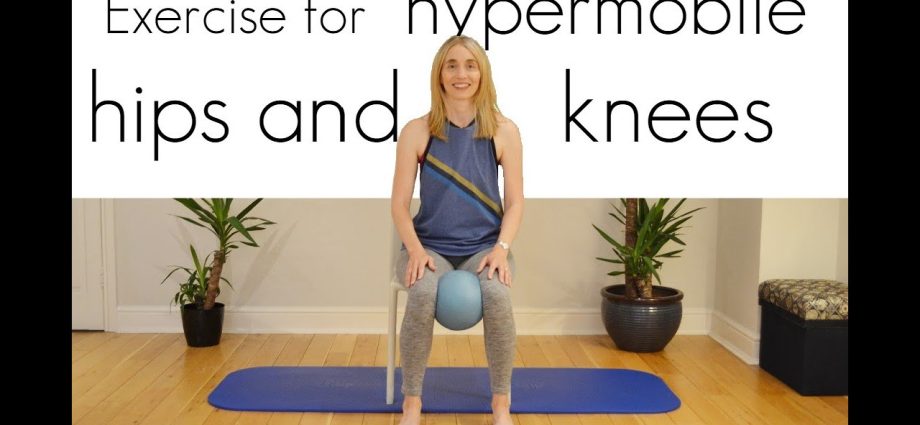
- Embrace isometrics: Holds like planks, wall sits, and glute bridges. They build stability without excessive joint movement.
- Control the eccentric: The lowering phase of a squat or a push-up is golden. Make it painfully slow. That’s where the real strengthening happens.
- Mind your end-range: Always keep a soft, micro-bend in elbows and knees. Never “lock out.” It feels weird at first, but it’s a game-changer.
2. Low-Impact Cardio: The Heart Helper
Running or HIIT might be too jarring. But your cardiovascular system still needs love. The goal is to get your heart rate up without punishing your joints.
Excellent options include:
- Swimming or water walking (the buoyancy is a dream).
- Cycling on a stationary bike (adjust seat height so your knee never fully straightens).
- Elliptical machines or brisk walking on even ground.
3. Mindful Flexibility & Recovery: The Reset
This is the biggest paradigm shift. You are already flexible. Stretching your muscles is fine, but you must avoid stretching your already lax ligaments. Forget about pulling yourself into deep stretches. Focus on muscle release and nervous system calming.
Think: foam rolling tight muscles (calves, quads, upper back), gentle nerve glides, and restorative poses with support. Use pillows, blocks, and bolsters generously. In a forward fold, for instance, bend your knees deeply or put blocks under your hands. The sensation should be a gentle release, not a deep pull.
A Sample Week in the Life of an HSD-Friendly Routine
Let’s make this concrete. Here’s a loose framework—listen to your body and adapt.
| Day | Focus | Example Activities |
| Monday | Lower Body Strength & Proprioception | Bodyweight squats (to a chair), step-ups, single-leg balance holds, bridges. |
| Tuesday | Gentle Cardio & Recovery | 20-min swim or cycle, followed by foam rolling and diaphragmatic breathing. |
| Wednesday | Upper Body & Core Strength | Wall push-ups, bent-over rows with light bands, plank variations (from knees if needed), bird-dog. |
| Thursday | Active Rest | Leisurely walk, gentle mobility flow focusing on controlled movement. |
| Friday | Full Body Integration | Repeat a favorite strength move from Mon/Wed, add light cardio, focus on form. |
| Weekend | Rest & Nervous System Care | Prioritize sleep. Maybe a supported restorative pose or simply doing something joyful that isn’t “exercise.” |
The Red Flags & The Green Lights
Learning to listen to your body’s signals is your most important skill. It’s frustrating, but it’s essential.
Stop immediately if you feel: A sharp, stabbing pain (not dull ache). Joint instability—a feeling of “giving way.” Or increased pain that lasts more than 2 hours after your session.
You’re on the right track if you feel: Muscle fatigue (that “good burn”). A sense of muscular control. Reduced pain or instability in daily life. And honestly, a bit of empowerment—that you’re finally working with your body, not against it.
Developing a fitness routine with hypermobility spectrum disorders is a deeply personal experiment. It’s slow. It requires patience you might not feel you have. There will be setbacks—days where your body says “no,” and that’s okay. The real victory isn’t in the weight lifted or the distance run. It’s in the small, quiet moments: climbing stairs without thinking about your knees, carrying groceries without your shoulder protesting, feeling a sense of sturdy confidence you forgot was possible. That’s the strength we’re really building here.