






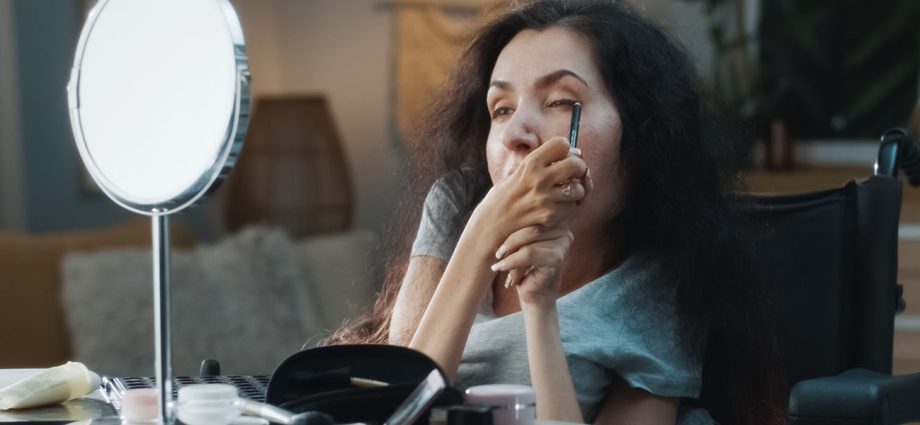
Let’s be honest. The beauty routine is often painted as a frivolous luxury. But for millions with limited mobility—whether from arthritis, chronic illness, injury, or aging—it’s something far more profound. It’s a ritual of self-care, a moment of control, and a powerful expression of identity. When standard brushes, compacts, and bottles become frustrating obstacles, that connection can fray.
Here’s the deal: you shouldn’t have to choose between comfort and expression. A quiet revolution is happening in the beauty industry, one focused on accessible beauty tools and adaptive makeup applicators. This isn’t about medical devices; it’s about ingenious, thoughtful design that brings joy back to the vanity.
Why Design Matters: The Core Principles of Adaptive Tools
So, what makes a tool “adaptive”? It’s not one-size-fits-all. It’s about options and understanding the common pain points—like reduced grip strength, limited wrist flexion, or shaky hands. The best designs address these with a few key principles:
- Ergonomic & Extended Handles: Thick, soft-grip handles that don’t require a tight pinch. Think of them like the easy-grip utensils for your makeup bag.
- Lightweight & Balanced: Heavy tools cause fatigue. Adaptive ones are often lighter or weighted in a way that provides stability.
- Simple Mechanics: Magnetic closures instead of tiny clasps, pump bottles over screw-tops, and easy-press mechanisms.
- Versatility: Tools that can be used in multiple ways or on different parts of the face with minimal adjustment.
Toolbox Transformations: Must-Have Adaptive Beauty Aids
Okay, let’s get practical. What should you actually look for? Here’s a breakdown of game-changing categories and some specific beauty tools for arthritic hands and beyond.
1. The Grip Game Changers
If holding a slim eyeliner pencil feels like trying to grasp a toothpick, this is your starting point. Look for foam grip sleeves you can slide onto existing brushes and pencils—they’re an affordable first step. Even better are tools designed from the ground up with chunky, contoured handles. Brands are now creating makeup brushes that look like smooth, sculpted stones, fitting perfectly in a palm, no pinching required.
2. Stable & Steady Bases
Tremors or lack of fine motor control make liquid liner a high-stakes mission. Enter: stabilized tools. Think of makeup applicators for limited dexterity with wide, flat bases that rest against the side of your face for guidance. Or, consider weighted brushes. The extra mass can dampen small shakes, providing a surprising amount of control—like anchoring yourself.
3. The Magic of Magnets & Simplicity
Fumbling with a tiny compact clasp is… infuriating. Magnetic closures are a true ally. Many adaptive makeup palettes use strong magnets for lids and even to secure pans. Pump dispensers for foundation and lotion beat screw-caps any day. And honestly, switching to cream-based products in stick form (for blush, shadow, even foundation) can eliminate the need for brushes altogether sometimes.
Smart Hacks & Everyday Adaptations
You don’t always need to buy something new. Sometimes, it’s about rethinking what you already have. Here are a few clever, low-tech adaptations:
- Leverage Your Environment: Rest your elbow on a firm table while doing eye makeup. Apply your entire routine seated at a table with a mirror propped up, rather than standing at a wobbly bathroom sink.
- The Power of Wrap: Use self-adhesive bandage tape or polymer clay to build up handles on toothbrushes, hairbrushes, or makeup brushes. It’s customizable and cheap.
- Go Hands-Free: A makeup mirror that stands on its own is crucial. Even better, one with a flexible “gooseneck” that you can position without holding.
Navigating the Market: What to Look For
While the adaptive beauty niche is growing, it’s still emerging. Here’s a quick guide to help you spot the right products, whether they’re marketed as “adaptive” or not.
| Feature | Benefit | Example Product Types |
| Extra-Large or Contoured Handle | Reduces grip strain, distributes pressure | Foundation brushes, hairbrushes, razor handles |
| Magnetic Closures & Components | Easy open/close, one-handed use | Eyeshadow palettes, travel cases |
| Long or Extendable Handles | Reduces need to bend or stretch | Foot scrubbers, long-handled sponges |
| Non-Slip Bases & Weighted Design | Adds stability, counters tremors | Nail polish bottles, makeup brush handles |
| Pump or Spray Dispensers | Eliminates twisting and pouring | Shampoo, conditioner, liquid foundation |
A quick note: Don’t overlook occupational therapy tools. The same easy grip aids for personal care designed for toothbrushes can often be repurposed for makeup brushes with a little creativity.
The Heart of the Matter: More Than Just Tools
Ultimately, this journey is about autonomy. It’s about the quiet confidence that comes from applying your favorite lipstick without assistance. It’s the sensory pleasure of a skincare routine you can manage yourself. These tools are, in a way, keys—they unlock a part of daily life that many take for granted.
The landscape is changing, thankfully. More brands are recognizing that beauty is for every body, with every kind of ability. They’re starting to see that designing for inclusivity often results in better, more thoughtful design for everyone. A jar that’s easy to open with weak hands is also easier for someone with wet, slippery hands.
So, begin with one thing. Identify the single most frustrating part of your routine. Maybe it’s that darn mascara wand. Perhaps it’s holding a round hairbrush. Find one adaptive solution or hack for that. See how it feels. That small victory, that reclaimed moment of ease, has a funny way of echoing through the rest of your day. And really, that’s what beauty—at its best—has always been about: not just how you look, but how you feel in your own skin, on your own terms.