








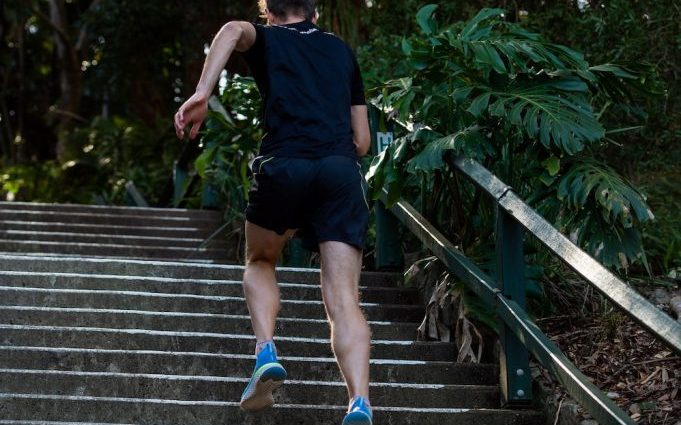
Let’s be honest for a second. You’ve probably heard the same old advice a thousand times: “Land on your midfoot,” “Keep your cadence high,” “Don’t overstride.” But here’s the thing—most of that advice is like telling someone to paint a masterpiece without giving them a brush. It’s not wrong, but it’s missing the why. That’s where biomechanics steps in. It’s the science of how your body actually moves, not just how you think it should move. And when you start correcting your running form based on biomechanics, you stop forcing your body into a mold and start unlocking what it was designed to do.
What Exactly Is Biomechanics-Based Running Form?
Biomechanics is, well, the study of movement—specifically how your muscles, bones, tendons, and joints work together to create motion. When we talk about running form correction through this lens, we’re not just looking at your feet hitting the ground. We’re looking at the whole chain: from your hips to your ankles, from your core to your shoulders. It’s like tuning a car engine instead of just polishing the hood.
Here’s the kicker: your body has its own unique geometry. Your leg length, your hip width, your natural arch height—they all influence how you run. A biomechanics-based approach doesn’t force you into a “perfect” pose. Instead, it identifies inefficiencies in your stride and corrects them. That’s way more sustainable than trying to copy some Olympian’s form.
Why Most “Form Cues” Fail
You know that feeling when a coach yells, “Lift your knees!” and suddenly you’re running like a marionette? That’s because most cues target the symptom, not the cause. Overstriding, for example, isn’t a foot problem—it’s a hip extension problem. If your hip flexors are tight, your leg can’t extend behind you properly, so you compensate by reaching forward. See the difference?
Key takeaway: Fix the root biomechanical limitation, and the “perfect” form emerges naturally. No forcing required.
The Big Three: What Biomechanics Actually Targets
Alright, let’s break this down into three core areas. Think of these as the pillars of biomechanics-based correction. If you nail these, everything else tends to fall into place—like dominoes, but in a good way.
1. Pelvic Stability and Core Engagement
Your pelvis is the command center. If it’s wobbling around, your legs and arms are going to be all over the place. A common issue? The “dropped hip” on the non-weight-bearing side. This usually happens when your gluteus medius is weak. You might not feel it, but it forces your lower back to overwork, and that’s a fast track to pain.
Try this: stand on one leg. If your other hip drops, that’s a red flag. The fix isn’t just “engage your core”—it’s strengthening the lateral hip muscles with exercises like clamshells or single-leg bridges. And honestly, just being aware of your pelvis during runs can make a huge difference. Imagine a bowl of water sitting on your hips. Don’t let it spill.
2. Ankle and Foot Mechanics
Your feet are your connection to the ground—literally. But here’s where it gets weird: a lot of runners think they need to “land softly” or “roll through the foot.” That’s not biomechanics; that’s poetry. The real question is: are your ankles stable enough to handle the load?
If your foot slaps the ground, it’s often not a “bad habit”—it’s a sign of weak calf muscles or poor proprioception. Data point: Studies show that runners with higher ankle stiffness (not rigidity, but controlled stiffness) tend to have better energy return. So instead of focusing on your foot strike pattern, focus on single-leg balance drills and eccentric calf raises. Your form will adapt.
3. Torso and Arm Positioning
You might think your arms are just along for the ride—but they’re actually counterbalancing your legs. If your arms cross your midline (that “T-Rex arm” thing), your torso rotates excessively, wasting energy. The biomechanical fix? Keep your shoulders relaxed and your elbows at about 90 degrees. Let your arms swing from the shoulder joint, not the elbow. And don’t clench your fists—imagine holding a potato chip between your thumb and forefinger. Crush it, and you’re too tense.
Here’s a quick table to sum up the common issues and their biomechanical roots:
| Common Problem | Biomechanical Root | Simple Fix |
|---|---|---|
| Overstriding | Limited hip extension | Hip flexor stretches + glute activation |
| Heavy heel striking | Weak calves or tight achilles | Eccentric heel drops |
| Bouncing too much | Excessive vertical oscillation | Focus on “pulling” the ground, not pushing |
| Upper back pain | Poor posture or weak rhomboids | Scapular retraction drills |
How to Actually Implement Biomechanics-Based Corrections
So you’ve got the theory. Now, how do you apply it without overthinking every step? Because let’s face it—if you’re analyzing your form mid-run, you’re probably going to trip over a curb. The trick is to integrate corrections slowly, like adding salt to a dish. A little at a time.
Start With Drills, Not Runs
Before you hit the pavement, spend 5–10 minutes on form drills. High knees, butt kicks, A-skips, B-skips—they’re not just for high school track. These drills reinforce the neural patterns your body needs. And they’re low-risk, so you can focus on the feeling without worrying about injury.
Pro tip: Record yourself doing these drills. What you think you’re doing and what you’re actually doing are often two different things. I learned this the hard way—I thought my hips were level, but the video showed a noticeable tilt. Humiliating, but helpful.
Use a Single Cue Per Run
Don’t try to fix everything at once. Pick one cue—like “soften my ankles” or “drive my elbows back”—and focus on it for the entire run. Your brain can only process so much at once. After a week, move to the next cue. This is called “chunking,” and it’s how elite athletes train. Slow and deliberate beats fast and frantic.
The Role of Strength Training (Yes, It’s Part of Form Correction)
Here’s a truth that might sting: you can’t run your way to better form. If your glutes are weak, no amount of “drive your knees” will fix your stride. Biomechanics-based correction demands that you build the foundation off the road. That means strength work—specifically, unilateral exercises (single-leg deadlifts, lunges) and plyometrics.
I know, I know—strength training sounds boring compared to a 10-mile run. But think of it this way: your muscles are the engine, and your form is the steering wheel. A great steering wheel won’t help if the engine is sputtering. Fact: A 2021 study in the Journal of Sports Sciences found that runners who did two strength sessions per week reduced ground contact time by 3.5%—a direct biomechanical improvement.
When to Question the “Experts”
Not all form advice is bad—but a lot of it is oversimplified. For instance, the “180 steps per minute” cadence rule? It’s a guideline, not a law. If you’re tall, your natural cadence might be lower. If you’re short, higher. The key is to find your sweet spot by listening to your body’s feedback—like a dull ache in your shins or a sharp twinge in your hip.
Biomechanics is about individualization. What works for your running buddy might wreck your knees. So take advice with a grain of salt—and a healthy dose of self-experimentation.
The Long Game: Patience Over Perfection
Here’s the thing about biomechanics-based correction: it’s not a quick fix. You won’t see results in a week. In fact, you might feel slower at first as your body adapts to new movement patterns. That’s normal. Your brain is literally rewiring motor pathways—it takes time, like learning a new dance step.
But stick with it. The payoff isn’t just speed—it’s sustainability. It’s running pain-free into your 50s, 60s, and beyond. It’s feeling like you’re gliding instead of grinding. And honestly, that’s worth more than a PR.
So next time someone tells you to “just land midfoot,” ask yourself: Why? What’s the biomechanical reason? If they can’t answer, maybe it’s time to dig deeper. Because your body already knows how to move—you just need to get out of its way.