




There’s a moment every parent dreads, even if they never say it out loud. It’s that quiet pause in the pediatrician’s office, the one where the doctor looks at a chart, then at your child, then back at the chart. For families living with rare genetic disorders, that moment often arrives after years of confusion, misdiagnosis, and frustration. But here’s the thing — that timeline is starting to shrink. Drastically.
AI-assisted early detection is changing the game for rare diseases. And honestly, it’s about time. We’re not talking about some sci-fi future where robots hand out diagnoses. We’re talking about real, working systems that analyze facial features, genomic data, and even electronic health records to spot patterns the human eye — or brain — might miss. Let’s dig into how this works, why it matters, and where the roadblocks still are.
The diagnostic odyssey — and why it’s so brutal
First, let’s paint the picture. The average time to get a correct diagnosis for a rare genetic disorder? Four to five years. Some families wait a decade. That’s not just a statistic — that’s missed early interventions, unnecessary surgeries, and a whole lot of parental guilt that shouldn’t exist.
Rare diseases are, by definition, rare. But collectively, they’re not. Around 300 million people worldwide live with one. That’s roughly the population of the United States. Yet each individual condition might only affect a handful of people in a given city. So when a child walks into a clinic with, say, a subtle facial dysmorphism and a heart murmur, the doctor’s brain doesn’t immediately jump to “Wolf-Hirschhorn syndrome.” Why would it?
That’s where AI steps in. Not as a replacement for doctors, but as a kind of supercharged memory. A pattern-recognition engine that has, quite literally, seen thousands of cases before.
Facial phenotyping: when a photo tells a thousand genes
One of the most fascinating tools in this space is facial phenotyping. Sounds technical, but it’s simple: certain genetic disorders leave subtle fingerprints on the face. A slightly wider nasal bridge, a particular curve of the lips, an unusual spacing between the eyes. These aren’t obvious to most clinicians — but they’re incredibly consistent within specific syndromes.
AI models, trained on tens of thousands of images of confirmed genetic conditions, can analyze a single photograph and rank potential diagnoses. We’re talking about tools like Face2Gene, which has been around for a while now. You upload a photo, and it spits out a list of possible syndromes with confidence scores.
Here’s the kicker — it’s not perfect. It’s a screening tool, not a diagnostic one. But it can take a clinician from “I have no idea” to “let’s test for these three specific genes” in a matter of minutes. That’s a leap from years to minutes. Sure, the final call still requires genetic testing, but the target is now clear.
Genomic sequencing and the AI that reads between the lines
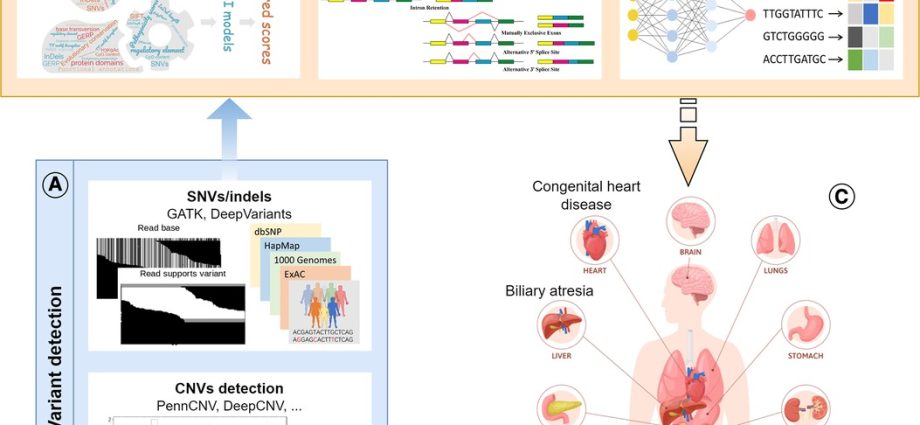
Facial analysis is cool, but the real heavyweight is genomic sequencing. A single human genome has about 3 billion base pairs. Reading that is one thing. Interpreting it? That’s where things get hairy.
Most rare genetic disorders are caused by variants in a single gene. But finding that one needle in a haystack of 20,000 genes is brutal. Traditional methods look for variants that are known to be harmful. But what about variants of uncertain significance? Or variants in genes we don’t fully understand yet?
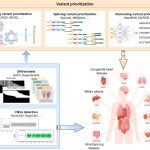
AI models, particularly deep learning algorithms, are getting better at predicting whether a specific genetic variant is likely to disrupt protein function. They don’t just match against databases — they learn the rules of molecular biology. Think of it like this: a human might look at a typo in a sentence and guess if it changes the meaning. AI looks at a single letter change in a 3-billion-letter book and predicts the consequence. That’s wild.
Recent studies show that AI-driven variant prioritization can reduce the time to diagnosis by up to 60% in certain cohorts. And for newborns in intensive care, that speed isn’t just nice — it’s life-altering. Some conditions, like certain metabolic disorders, need dietary changes within the first weeks of life to prevent brain damage. Every day counts.
Electronic health records: the silent goldmine
Here’s something you might not think about — the data already sitting in hospital systems. Every lab result, every specialist note, every prescription. For a rare disease patient, that data often spans years and multiple hospitals. No human can read all of it and connect the dots.
AI can. Natural language processing (NLP) models can scan unstructured clinical notes and flag patterns. For instance, a child who keeps showing up with “failure to thrive,” “recurrent infections,” and “developmental delay” — three vague symptoms that, together, might point to a specific immunodeficiency syndrome.
Some hospitals are now running “silent screening” programs where AI continuously reviews incoming patient data and alerts clinicians when a rare disease pattern emerges. It’s like having a tireless librarian who’s read every textbook and never sleeps.
Where it falls short (let’s be real)
Okay, so AI is impressive. But it’s not magic. There are real, gnarly problems.
- Bias in training data: Most facial phenotyping tools are trained on images of European descent. A child of African or Asian ancestry might get less accurate results. That’s a huge equity issue.
- False positives: AI can suggest a rare disease that isn’t there. That leads to anxiety, unnecessary tests, and sometimes invasive procedures. It’s a delicate balance.
- Integration challenges: Many clinics still use paper records or outdated systems. You can’t run AI on data you don’t have.
- The “black box” problem: Some AI models can’t explain why they made a prediction. For a doctor, that’s uncomfortable. For a lawyer, it’s a nightmare.
But here’s the thing — these problems are solvable. And they’re being worked on, right now, in labs around the world.
What the near future holds
We’re moving toward a world where whole-genome sequencing at birth becomes standard. Several countries, including the UK and parts of the US, are piloting newborn genome screening programs. Combine that with AI interpretation, and you could catch hundreds of rare conditions before symptoms even appear.
Imagine a baby born with a variant that predisposes them to malignant hyperthermia — a rare reaction to certain anesthesia drugs. If that’s flagged at birth, the anesthesiologist knows to avoid those drugs. That’s not hypothetical. That’s the kind of prevention AI makes possible.
There’s also work on polygenic risk scores for rare diseases, though that’s more complex. And some researchers are using AI to repurpose existing drugs for rare conditions — because let’s face it, pharma companies don’t rush to develop treatments for diseases that affect 200 people worldwide.
A note on the human side
I want to pause here, because it’s easy to get lost in the tech. But the real story is about families. I remember reading about a mother who spent seven years trying to find out why her son couldn’t walk properly. Seven years of physiotherapy, braces, and “maybe he’s just clumsy.” A facial analysis tool suggested a rare neuromuscular disorder in under a minute. The genetic test confirmed it. She cried, not because of the diagnosis, but because someone finally saw it.
That’s the emotional weight here. AI isn’t replacing the doctor’s empathy or the parent’s intuition. It’s just removing the blindfold.
Practical takeaways for clinicians and families
If you’re a clinician, start small. Use a facial phenotyping app as a second opinion, not a first one. If you’re a family stuck in the diagnostic odyssey, ask about genomic sequencing — and ask if AI tools are being used in interpretation. You don’t need to be a tech wizard to advocate for your child.
And for the policymakers reading this (you know who you are) — fund the infrastructure. AI is only as good as the data it can access. Interoperable health records, diverse training sets, and clear ethical guidelines aren’t optional extras. They’re the foundation.
The quiet revolution
Here’s what strikes me most. We’re not talking about curing rare diseases yet. We’re talking about finding them. And that feels more achievable. Because you can’t treat what you can’t name. AI is giving us the names.
Sure, there will be hiccups. Algorithms will make mistakes. Some diagnoses will be missed. But the trajectory is clear — the diagnostic odyssey is getting shorter, one model at a time. And for the millions of families waiting in that quiet pediatrician’s office, that’s not just progress. It’s hope with a timestamp.
In the end, this isn’t about machines taking over medicine. It’s about machines helping humans be more human — more attentive, more precise, more present. And that’s a future worth building.