








Here’s something that doesn’t get nearly enough airtime in wellness circles: your metabolism doesn’t run on a flat, 24-hour loop. It rises and falls with the sun — well, sort of. Your body has an internal timing system, a kind of biological conductor, that tells your hormones, enzymes, and even your gut bacteria when to show up for work. Mess with that schedule, and things get messy. Blood sugar creeps up. Cravings spike. Fat storage gets a little too comfortable.
We call this internal timing system the circadian rhythm. And optimizing it? Honestly, it might be one of the most underrated levers for metabolic health out there.
What Exactly Is the Circadian Rhythm, Anyway?
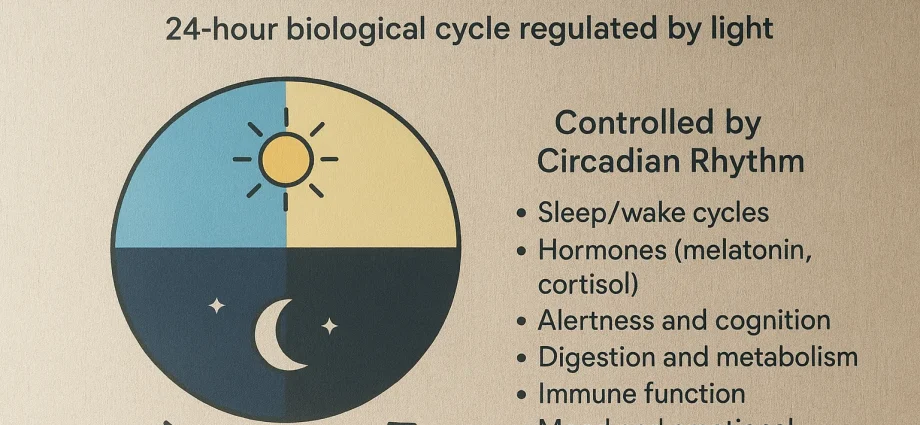
Think of it like a symphony orchestra. Every cell in your body has its own instrument, but there’s a master clock — a tiny cluster of neurons in your brain called the suprachiasmatic nucleus — keeping everyone in tempo. Light hits your eyes in the morning, and that master clock cues a cascade of events: cortisol rises, insulin sensitivity improves, digestion revs up.
When the sun goes down, the tempo shifts. Melatonin rises, body temperature drops, and your metabolism pivots toward repair and storage rather than burn. This isn’t woo-woo stuff. It’s hardwired biology, and it’s been fine-tuned over millions of years.
The problem? Modern life throws a wrench in the works. Late-night scrolling, 11 p.m. dinners, caffeine at 4 p.m., alarm clocks that jolt us awake before dawn… Our ancestors didn’t deal with any of that. And our metabolisms are paying the price.
The Metabolic Fallout of a Broken Clock
When your circadian rhythm drifts out of sync — a state researchers call “circadian misalignment” — the consequences aren’t subtle. Studies on shift workers, who are basically the poster children for this problem, show higher rates of obesity, type 2 diabetes, and even cardiovascular disease. That’s not just because they eat worse or move less. It’s because their internal clocks are perpetually jet-lagged.
Even in people who don’t work nights, small disruptions add up. Eating late at night, for instance, has been linked to poorer glucose tolerance. Why? Because your pancreas is less efficient at pumping out insulin when it thinks it’s bedtime. Same meal, different time of day, wildly different metabolic response. Timing matters — sometimes as much as what you eat.
Signs Your Body Clock Might Be Off
Not sure if this applies to you? Here are a few red flags:
- You wake up groggy even after eight hours of sleep
- Your energy crashes hard mid-afternoon
- You crave sugar or carbs late at night
- You feel hungry in the morning but somehow skip breakfast anyway
- Your digestion is sluggish or unpredictable
- You’ve gained weight despite not changing your diet
If a few of those hit home, don’t panic. The good news is that circadian rhythms are surprisingly responsive to simple adjustments. You’re not stuck.
How to Optimize Your Circadian Rhythm for Better Metabolic Health
Let’s dive into the practical stuff. These aren’t exotic biohacks — they’re grounded in solid research and, well, common sense.
1. Anchor Your Morning with Light
Within 30 to 60 minutes of waking, get outside. Even on a cloudy day, natural light is exponentially brighter than indoor lighting. This early light exposure sets the tone for the entire day — it tells your brain “okay, we’re awake, start the metabolic engines.”
Can’t get outside? A light therapy lamp can help. But honestly, a short walk beats a lamp any day.
2. Eat During Daylight Hours
Your body processes food differently depending on the time of day. Insulin sensitivity tends to be highest in the morning and early afternoon, then declines as evening approaches. So a heavy meal at 9 p.m. is metabolically very different from the same meal at noon.
Try to finish eating three hours before bed. If that feels impossible, start by pushing dinner 30 minutes earlier. Small shifts, big payoffs.
3. Keep Your Sleep Schedule Consistent
You’ve heard this before, but it bears repeating: going to bed and waking up at roughly the same time every day — yes, even weekends — stabilizes your circadian rhythm more than almost anything else. Your body thrives on predictability.
And no, you can’t fully “catch up” on sleep. That’s a myth. Sorry.
4. Watch the Evening Light
Blue light from screens suppresses melatonin, the hormone that signals “time to wind down.” Dim your environment in the evening. Use warm lamps, lower brightness, or — radical idea — read a physical book.
5. Time Your Exercise Wisely
Morning movement can reinforce your circadian rhythm, especially if it’s outdoors. Intense workouts late at night, on the other hand, may delay melatonin release and push your sleep later. If evening is your only option, keep it moderate.
A Quick Comparison: Aligned vs. Misaligned
| Factor | Aligned Circadian Rhythm | Misaligned Rhythm |
|---|---|---|
| Morning energy | Steady, alert | Groggy, slow start |
| Blood sugar control | Efficient | Erratic spikes |
| Cravings | Manageable | Strong, especially at night |
| Sleep quality | Deep, restorative | Fragmented, restless |
| Weight management | Easier | Stubborn, resistant |
It’s Not About Perfection
Look, nobody’s circadian rhythm is flawless. Life happens — late flights, deadline nights, holiday parties. The goal isn’t rigid perfection. It’s resilience. Can your body bounce back quickly after a disruption? That’s what matters.
And here’s the thing: optimizing your circadian rhythm isn’t just about metabolism. It ripples outward. Better sleep, sharper focus, steadier mood. It’s one of those foundational habits that makes everything else easier.
So maybe the question isn’t “what should I eat?” or “how much should I exercise?” Maybe it’s simpler — and deeper: when should I be doing all of it?
Your body already knows the answer. You just have to listen.