








One more layer: grip strength isn’t just muscle. It’s neural. Your brain has to send a signal, your nerves have to carry it, and your muscles have to respond. When that pathway gets fuzzy — from inactivity, aging, or illness — grip drops before muscle mass does.
So when you train grip, you’re not just building forearms. You’re sharpening a neurological pathway that runs from your cortex to your fingertips. That’s why grip strength correlates with cognitive function. The hand is a window into the brain.
A Simple Test You Can Do Today
No dynamometer? No problem. Try this:
- Hang from a pull-up bar. Time it.
- Carry a heavy suitcase in one hand for 30 seconds. Switch sides.
- See how many times you can squeeze a tennis ball in 30 seconds. Compare left vs. right.
Write the numbers down. Retest in a month. If they’re climbing, good. If they’re stuck or falling, that’s your cue to add a little grip work. Not because you need to crush apples with one hand, but because your future self — the one who wants to travel, play with grandkids, and live independently — will thank you.
Grip strength won’t make you immortal. But it might just keep you in the game longer. And for everyday athletes, that’s the whole point.
The Nervous System Connection
One more layer: grip strength isn’t just muscle. It’s neural. Your brain has to send a signal, your nerves have to carry it, and your muscles have to respond. When that pathway gets fuzzy — from inactivity, aging, or illness — grip drops before muscle mass does.
So when you train grip, you’re not just building forearms. You’re sharpening a neurological pathway that runs from your cortex to your fingertips. That’s why grip strength correlates with cognitive function. The hand is a window into the brain.
A Simple Test You Can Do Today
No dynamometer? No problem. Try this:
- Hang from a pull-up bar. Time it.
- Carry a heavy suitcase in one hand for 30 seconds. Switch sides.
- See how many times you can squeeze a tennis ball in 30 seconds. Compare left vs. right.
Write the numbers down. Retest in a month. If they’re climbing, good. If they’re stuck or falling, that’s your cue to add a little grip work. Not because you need to crush apples with one hand, but because your future self — the one who wants to travel, play with grandkids, and live independently — will thank you.
Grip strength won’t make you immortal. But it might just keep you in the game longer. And for everyday athletes, that’s the whole point.
There’s no single magic number. It depends on age, sex, body size, and training history. But rough benchmarks exist. For men in their 30s and 40s, a grip around 45–50 kg is often cited as solid. For women in the same range, 25–30 kg. By your 60s, those numbers can drop by 20–30% and still be considered normal — which is exactly why they matter.
Here’s a simple way to think about it: if you can’t hang from a pull-up bar for at least 30 seconds, or carry two heavy grocery bags for a block without switching hands, your grip might be whispering something. Not shouting. Whispering.
Training Grip Without Living in the Gym
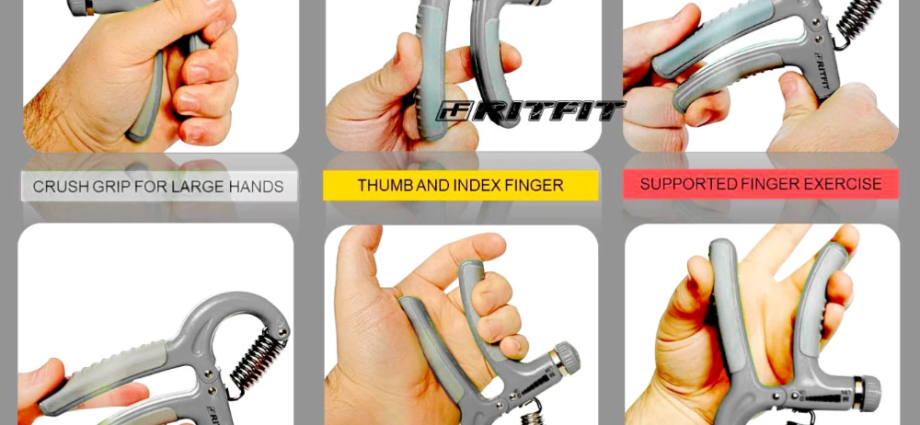
You don’t need a dedicated grip day. You don’t need fancy equipment. You need consistency and a little creativity. Try these:
- Farmer’s carries. Grab two heavy dumbbells or kettlebells. Walk 30–40 meters. Repeat 3–4 times. This hits grip, core, and posture all at once.
- Dead hangs. Find a pull-up bar. Hang. Aim for 30–60 seconds. Do 2–3 sets. It decompresses your spine too, which is a nice bonus.
- Towel pull-ups or rows. Drape a towel over a bar or use thick handles. The extra thickness forces your forearms to work harder.
- Rice bucket digs. Sounds silly. Works. Bury your hands in a bucket of rice, then open and close your fingers, twist, and scoop. Great for wrist health and finger strength.
- Plate pinches. Pinch two smooth weight plates together and hold. Start light. Your thumbs will protest. They’ll get over it.
Two or three short sessions a week is plenty. You’re not training for a handshake contest. You’re training for the next 40 years of opening jars, carrying kids, and catching yourself when you trip.
The Nervous System Connection
One more layer: grip strength isn’t just muscle. It’s neural. Your brain has to send a signal, your nerves have to carry it, and your muscles have to respond. When that pathway gets fuzzy — from inactivity, aging, or illness — grip drops before muscle mass does.
So when you train grip, you’re not just building forearms. You’re sharpening a neurological pathway that runs from your cortex to your fingertips. That’s why grip strength correlates with cognitive function. The hand is a window into the brain.
A Simple Test You Can Do Today
No dynamometer? No problem. Try this:
- Hang from a pull-up bar. Time it.
- Carry a heavy suitcase in one hand for 30 seconds. Switch sides.
- See how many times you can squeeze a tennis ball in 30 seconds. Compare left vs. right.
Write the numbers down. Retest in a month. If they’re climbing, good. If they’re stuck or falling, that’s your cue to add a little grip work. Not because you need to crush apples with one hand, but because your future self — the one who wants to travel, play with grandkids, and live independently — will thank you.
Grip strength won’t make you immortal. But it might just keep you in the game longer. And for everyday athletes, that’s the whole point.
You’re at the grocery store. A jar of pickles refuses to budge. You twist, you grimace, you maybe even mutter something under your breath. Then you hand it to your kid — and they pop it open like it’s nothing. Embarrassing? Sure. But here’s the thing: that little moment might be telling you more about your future health than your last blood pressure reading.
Grip strength has quietly become one of the most talked-about markers in longevity research. Not because strong hands are inherently virtuous, but because they seem to act like a dashboard light for your whole body. And for everyday athletes — the weekend warriors, the pickup basketball regulars, the folks who jog three times a week and call it good — this matters more than you’d think.
Why a Handshake Became a Health Metric
Researchers have been measuring grip strength with a device called a dynamometer for decades. You squeeze it, it gives a number in kilograms or pounds. Simple. But what that number correlates with is anything but simple.
Studies tracking thousands of adults over many years have found that lower grip strength is linked to higher risk of cardiovascular disease, disability, and all-cause mortality. In fact, some large-scale analyses suggest grip strength predicts death and disease about as well as — sometimes better than — systolic blood pressure.
That’s a bold claim. But it makes sense when you think about it. Your grip isn’t just your hand. It’s a chain reaction: forearm, wrist, nervous system, muscle mass, bone density, even your brain’s ability to send and receive signals. When that chain weakens, it’s often a sign that other systems are slipping too.
The Everyday Athlete’s Blind Spot
Here’s the deal. Most casual athletes focus on the big stuff: run times, cycling watts, how many pushups they can crank out. Grip strength rarely makes the list. Why would it? You don’t need a crushing handshake to finish a 5K.
But that’s exactly the blind spot. You can have decent cardio and still be losing muscle mass, bone density, and neural drive — the very things grip strength reflects. Think of it like a car with a strong engine but rusty brakes. The engine gets all the attention. The brakes quietly decide whether you stop safely.
And honestly? Grip is one of the first things to go as we age. Not because we stop using our hands, but because we stop challenging them. Typing, scrolling, opening doors — these don’t build grip. They just maintain a baseline that slowly erodes.
What the Research Actually Says
Let’s look at some numbers, because numbers cut through the noise.
| Finding | What It Suggests |
|---|---|
| Each 5 kg drop in grip strength linked to ~16% higher risk of all-cause mortality | Small changes matter more than you’d expect |
| Grip strength often outperforms BMI as a predictor of heart disease | Function beats physique |
| Low grip in midlife associated with faster cognitive decline | Hand and brain are wired together |
| Grip training can improve functional independence in older adults | It’s trainable — not just a warning sign |
That last row is the hopeful part. Grip strength isn’t just a passive marker. It’s a lever you can pull. And pulling it seems to tug other systems along for the ride.
How Strong Is “Strong Enough”?
There’s no single magic number. It depends on age, sex, body size, and training history. But rough benchmarks exist. For men in their 30s and 40s, a grip around 45–50 kg is often cited as solid. For women in the same range, 25–30 kg. By your 60s, those numbers can drop by 20–30% and still be considered normal — which is exactly why they matter.
Here’s a simple way to think about it: if you can’t hang from a pull-up bar for at least 30 seconds, or carry two heavy grocery bags for a block without switching hands, your grip might be whispering something. Not shouting. Whispering.
Training Grip Without Living in the Gym
You don’t need a dedicated grip day. You don’t need fancy equipment. You need consistency and a little creativity. Try these:
- Farmer’s carries. Grab two heavy dumbbells or kettlebells. Walk 30–40 meters. Repeat 3–4 times. This hits grip, core, and posture all at once.
- Dead hangs. Find a pull-up bar. Hang. Aim for 30–60 seconds. Do 2–3 sets. It decompresses your spine too, which is a nice bonus.
- Towel pull-ups or rows. Drape a towel over a bar or use thick handles. The extra thickness forces your forearms to work harder.
- Rice bucket digs. Sounds silly. Works. Bury your hands in a bucket of rice, then open and close your fingers, twist, and scoop. Great for wrist health and finger strength.
- Plate pinches. Pinch two smooth weight plates together and hold. Start light. Your thumbs will protest. They’ll get over it.
Two or three short sessions a week is plenty. You’re not training for a handshake contest. You’re training for the next 40 years of opening jars, carrying kids, and catching yourself when you trip.
The Nervous System Connection
One more layer: grip strength isn’t just muscle. It’s neural. Your brain has to send a signal, your nerves have to carry it, and your muscles have to respond. When that pathway gets fuzzy — from inactivity, aging, or illness — grip drops before muscle mass does.
So when you train grip, you’re not just building forearms. You’re sharpening a neurological pathway that runs from your cortex to your fingertips. That’s why grip strength correlates with cognitive function. The hand is a window into the brain.
A Simple Test You Can Do Today
No dynamometer? No problem. Try this:
- Hang from a pull-up bar. Time it.
- Carry a heavy suitcase in one hand for 30 seconds. Switch sides.
- See how many times you can squeeze a tennis ball in 30 seconds. Compare left vs. right.
Write the numbers down. Retest in a month. If they’re climbing, good. If they’re stuck or falling, that’s your cue to add a little grip work. Not because you need to crush apples with one hand, but because your future self — the one who wants to travel, play with grandkids, and live independently — will thank you.
Grip strength won’t make you immortal. But it might just keep you in the game longer. And for everyday athletes, that’s the whole point.